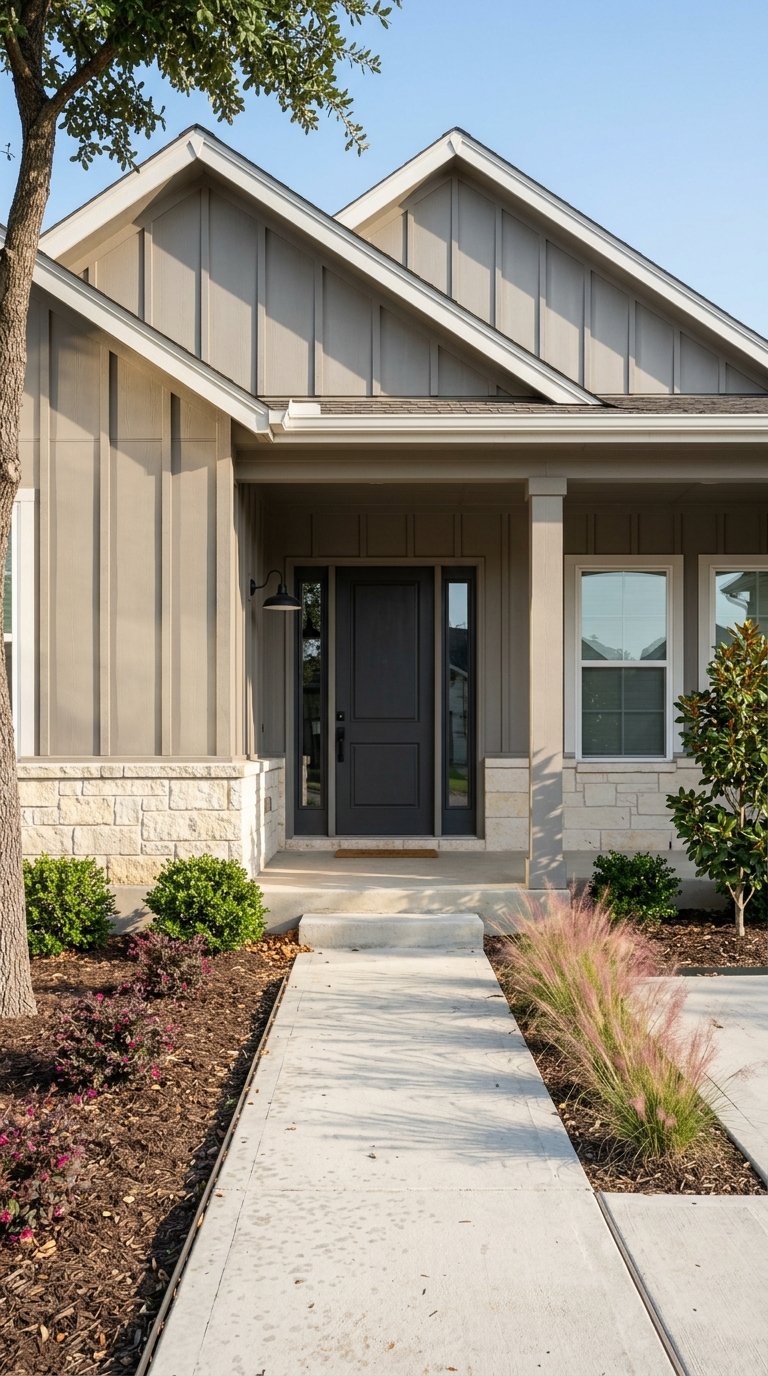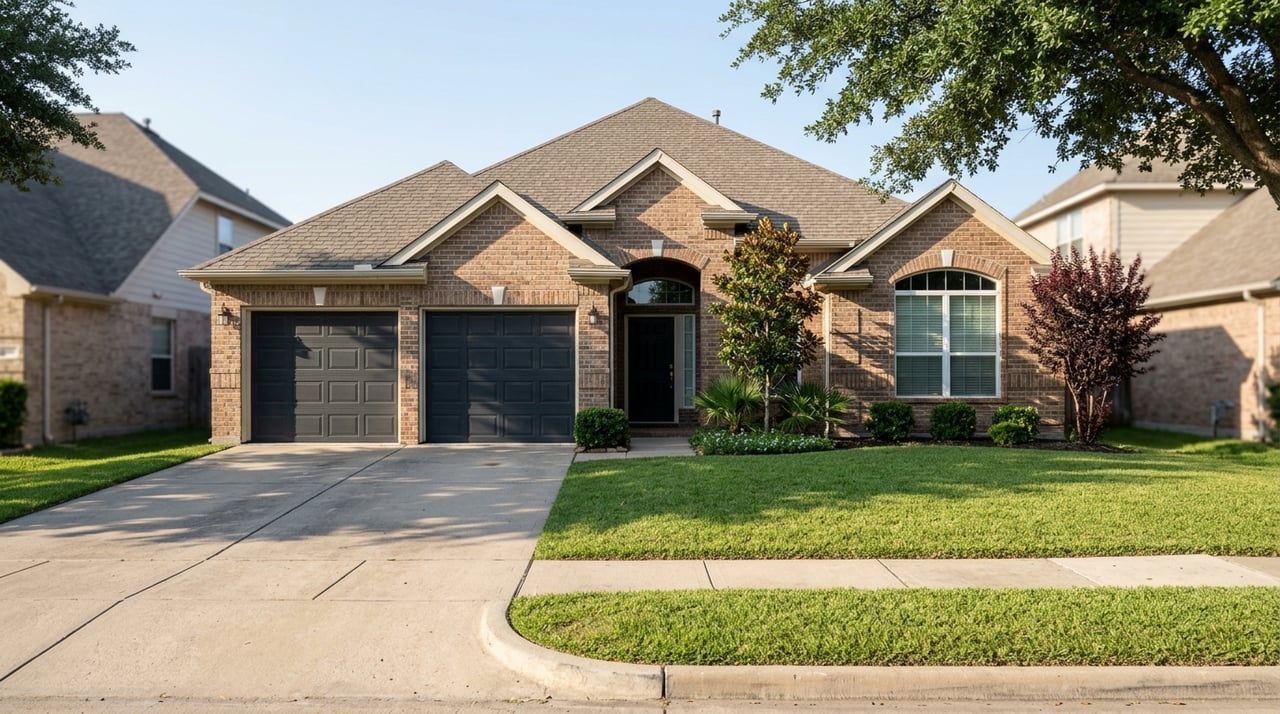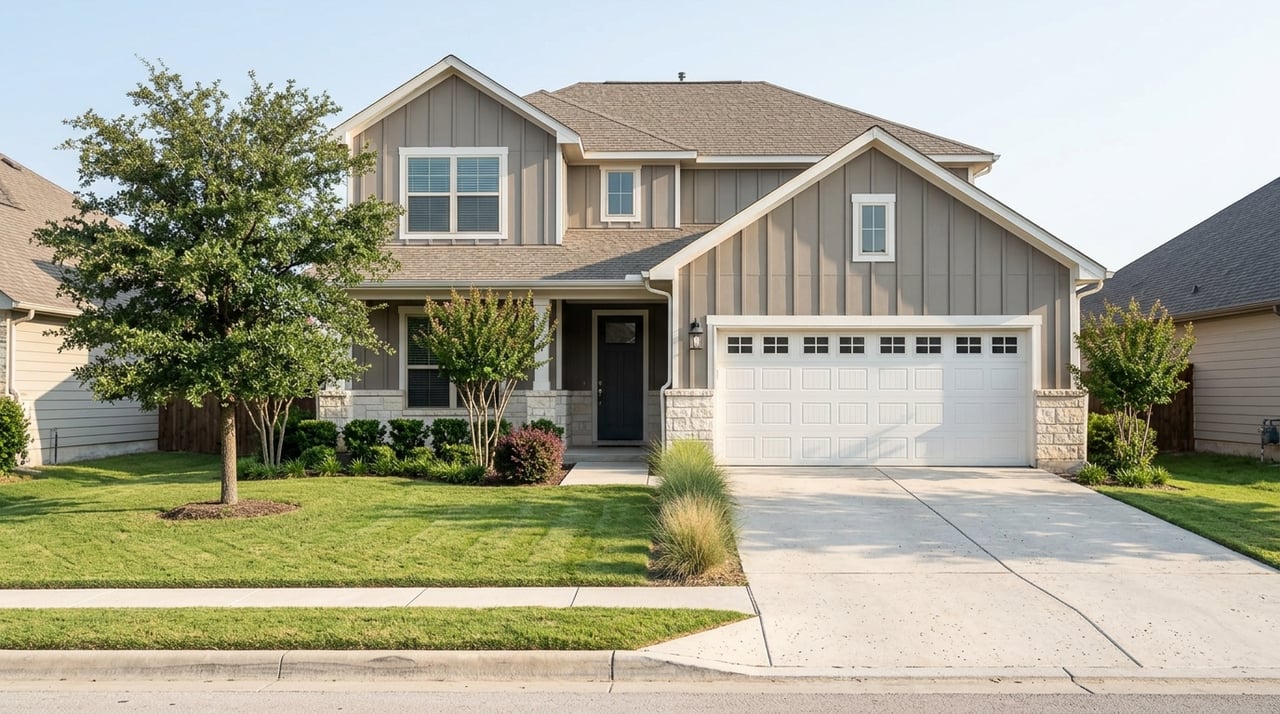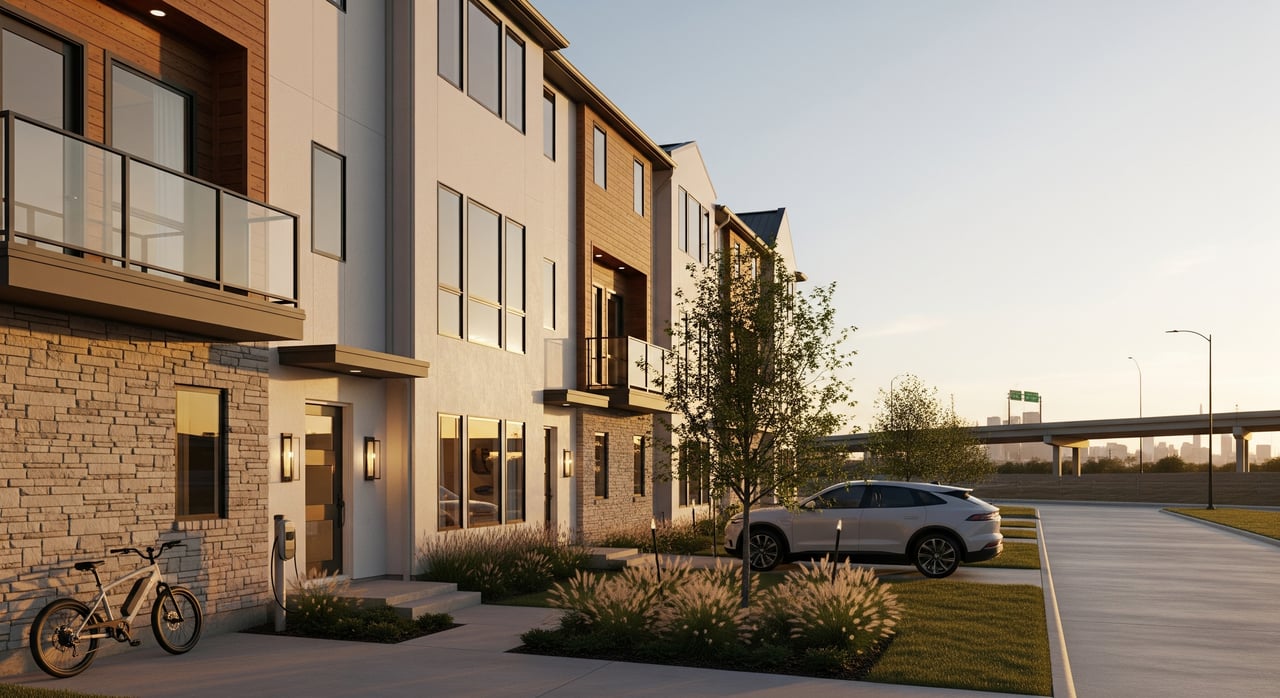
Say you have been house hunting inside the Loop for months, and a friend tells you to look at Sugar Land or Missouri City because your money "goes further out there." You pull up two listings the same weekend. One is a 2,400 square foot home in a Harris County zip a few miles inside Beltway 8. The other is a newer 2,800 square foot home in an unincorporated Fort Bend subdivision, listed for roughly the same price. Same PITI ballpark, right?
Not quite. There is a line item on the Fort Bend home that does not exist on the Harris County home, and it is often big enough to erase the extra square footage on paper. Before you rank the two houses on kitchen finishes and yard size, you have to price the tax stack that sits underneath each one. That is where a Houston-to-Fort-Bend comparison actually gets decided.
The line most Houston buyers do not see until closing
A Harris County tax bill is layered. County, city, HISD or another ISD, community college, hospital district, sometimes an ESD. In the aggregate, Harris County's effective rate lands around 2.03% on a typical home, driven mostly by the school district piece.
Cross into Fort Bend County and the stack gets taller. You still have county, ISD, city if you are inside one, and community college. Then you add the district that is easy to miss when you are scanning a listing: a Municipal Utility District, or in some master-planned pockets, a Public Improvement District or Levee Improvement District. Fort Bend County has more than 200 special districts levying property taxes for specific purposes, which is unusual by Texas standards.
A MUD is not a fee. It is a taxing entity that issued bonds to build the water, sewer, drainage, and often the streets in a subdivision that developed ahead of city infrastructure. Homeowners inside the district pay it back through the property tax bill. Rates commonly add anywhere from $0.20 to $1.50 per $100 of assessed value on top of everything else, and newer developments where the bonds are freshly issued can sit at the top of that range.
Two homes on the same Fort Bend street can carry meaningfully different combined rates if one is inside a MUD and the neighbor built ten years earlier is not. Same school district. Same city services. Different bill.
What "the same monthly payment" actually looks like across the county line
Here is where the sticker-price story falls apart. Consider a $425,000 home under three plausible tax setups, using a rough 20% down loan at May 2026's average 30-year fixed rate of about 6.45%.
| Location profile | Combined effective rate | Annual tax | Monthly tax escrow | Approx. total PITI |
|---|---|---|---|---|
| Harris County, established Houston neighborhood | ~2.03% | ~$8,600 | ~$720 | ~$2,860 |
| Sugar Land, non-MUD pocket | ~1.84% | ~$7,800 | ~$650 | ~$2,790 |
| Fort Bend MUD-heavy new subdivision | ~3.00% | ~$12,750 | ~$1,065 | ~$3,205 |
The gap between the Sugar Land non-MUD scenario and the newer MUD-heavy scenario is roughly $415 a month on the same purchase price. Reversed into affordability, that same $415 supports about $60,000 to $65,000 more in loan principal at current rates. Which is to say: the buyer who prices only the sticker and ignores the tax stack is often shopping in the wrong price band by a full tier.
None of this shows up in a portal search filter. The rate you actually pay is a function of which taxing entities the parcel sits inside, and that is knowable before you write an offer.
Why the MUD number is not the ISD number
A common assumption is that if the tax rate is higher today, it will keep climbing. That is broadly true for ISD and county rates, which respond to service budgets and appraisal growth year after year. It is not how a MUD works.
A MUD rate is a debt service rate. It exists to pay back a specific stack of infrastructure bonds. As those bonds amortize, and as more homes get built inside the district and share the burden, the rate typically steps down. A subdivision that opens at $1.20 per $100 in 2026 may be at $0.70 in ten years and much lower after that. It is one of the few line items on a Texas property tax bill that has a built-in downward trajectory.
That has two practical consequences for a Houston buyer looking at Fort Bend inventory. First, a high MUD rate on a new-construction home is not permanent, so the affordability math a decade out looks different from the affordability math on move-in day. Second, an older Fort Bend neighborhood inside a mature MUD often has a lower combined rate than the shiny subdivision two miles down the road, even when the homes are broadly comparable. If you are cash-flow sensitive, the seven-year-old resale can beat the new build on total monthly cost without giving up much in finish quality.
The market conditions that make this matter right now
Houston is not in a seller's market anymore. According to the Houston Association of Realtors May 2026 report, single-family days on market moved from 51 to 54 year over year, months of supply held at 5.1, and pending sales climbed 5.8%. Median sale price was statistically flat at $340,000 with the average up 2.3% to $447,301. HAR Chair Theresa Hill described the moment as buyers having "more flexibility and more choices than we've seen in recent years."
Translated for someone crossing county lines: buyers can slow down, compare across submarkets, and ask sellers for concessions. That is exactly the environment in which the tax-stack question earns its keep. In a fast market a buyer might reasonably ignore a 60 basis point difference in combined rate to win the house. At 54 days on market with a 5-month supply, there is time to run the escrow number twice and let it decide the offer.
The county itself is not standing still on the revenue side. Fort Bend commissioners passed a $760 million FY2026 budget, and while the county tax rate held flat, the median homeowner will pay $1,197 to the county and its drainage district this year, roughly $56 more than last year. That is the county piece only. Everything else stacks on top.
How to price the MUD before you write the offer
The escrow number a lender quotes on the pre-approval is a placeholder based on a generic county average. It is often wrong by hundreds of dollars a month in Fort Bend, in either direction. Before you go under contract, do this:
- Pull the parcel on Fort Bend Central Appraisal District and note every taxing jurisdiction listed. There are usually six to eight.
- Cross-reference the MUD or LID number on the county's Find Your MUD/LID tool to confirm which district the address sits in.
- Look up the current year rate for that specific MUD. Newer MUDs will publish a rate schedule; older ones may have step-downs already scheduled.
- Add the rates for every jurisdiction and multiply by the likely appraised value, not the sale price. Under Texas homestead rules those numbers can diverge, but the first year at a new appraisal is usually close to sale price.
- Divide by twelve and hand that number to your lender to redo the payment quote.
That process takes about thirty minutes per parcel. It has saved buyers in Fort Bend from writing offers on homes whose true monthly cost would have burned through their comfort zone.
The protest window that resets the math after closing
If you buy in Fort Bend, the May 15, 2026 protest deadline is the single most valuable calendar date in your first year of ownership. FBCAD reappraises most properties annually, and the higher your combined rate, the more each dollar of overvaluation costs you. On a home with a 3.0% combined rate, a $30,000 assessment reduction saves roughly $900 a year, every year, until the next reappraisal.
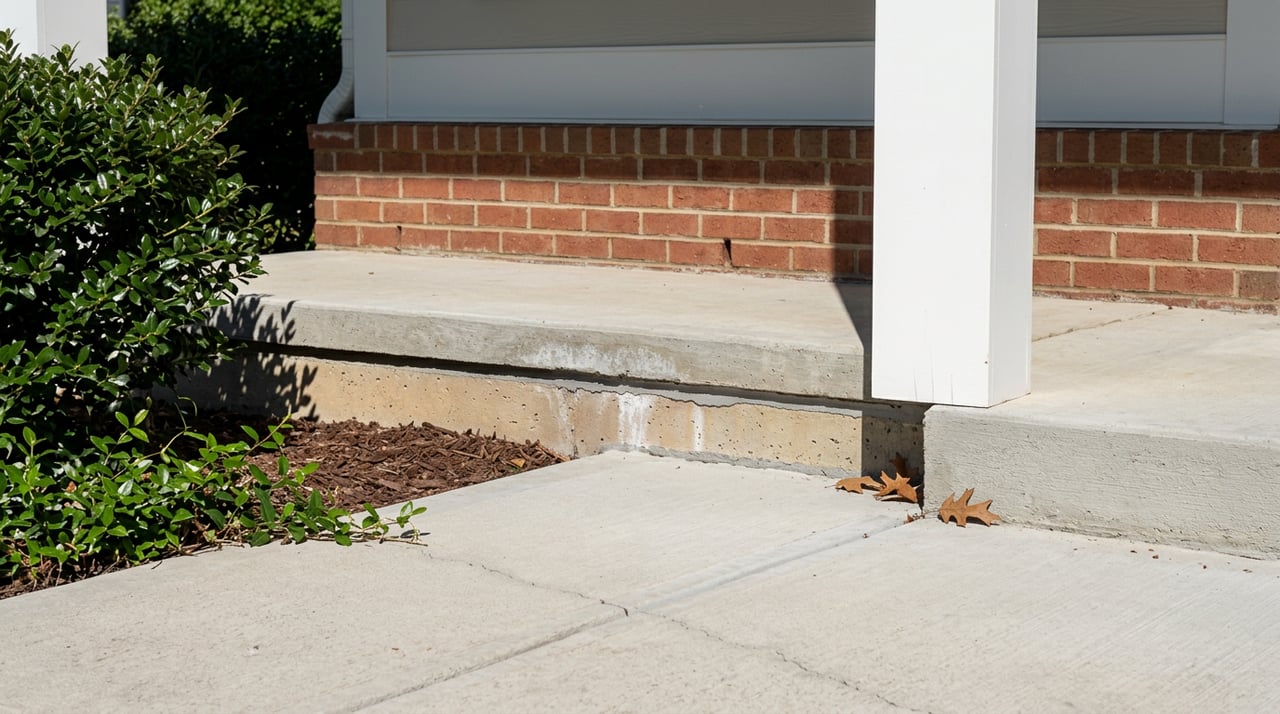
Two protest angles have unusual leverage in Fort Bend. The first is foundation movement on the county's expansive clay soils. An engineer's elevation reading, photos of interior cracks, and repair estimates carry weight because appraisers already understand what clay does here. The second is MUD tax burden itself. In a subdivision where the combined rate exceeds 3%, buyers routinely pay less per square foot than in comparable non-MUD neighborhoods. If FBCAD's comps do not adjust for that, you have an argument.
FAQ
Does the MUD tax go away when the bonds are paid off? The debt-service portion does. The maintenance and operations portion, which is smaller, typically continues to fund ongoing utility operations. Older mature MUDs in Sugar Land and Missouri City are often at a fraction of their opening rate.
Are PIDs the same as MUDs? No. A Public Improvement District is not a political taxing entity. PIDs fund amenities like parks, sidewalks, and landscaping through special assessments backed by liens against the property, usually over a set number of years defined in the service contract. A PID assessment can look similar on a mortgage statement but behaves differently in resale disclosures.
Can I estimate the MUD rate before FBCAD publishes the current year? Usually, yes. Each MUD posts prior-year rates on its own site or through its tax assessor. Rates rarely swing more than a few cents year to year outside of a new bond issuance.
Ready to run the numbers on a specific address
The right Fort Bend home for one Houston family is the wrong one for another, and the tax stack is a big part of why. If you are weighing a move across the county line and want a clear read on what your monthly payment will actually look like on the addresses you are watching, Denise Moore Homes is happy to pull the taxing jurisdictions with you and walk through what the number means for your budget. Let's connect.