Most Richmond sellers plan for staging, photos, and pricing. Fewer plan for the two moments after the contract is signed when buyers most often ask for money back: the utility district notice that has to be delivered before signatures, and the foundation elevation reading that comes out of the inspection.
Both are local. Both are documented in advance if you know where to look. And in a market where homes in ZIP 77406 sat a median of 91 days in February 2026 compared with 55 a year earlier, they are the two easiest places for a buyer to re-trade the price.
The thesis, in one line
In Richmond right now, the MUD notice and the clay-soil foundation question are not paperwork. They are negotiation leverage. Handling them before you list keeps that leverage on your side of the table.
What actually changed with the MUD notice in 2023
If your Richmond home sits inside a Municipal Utility District, and most master-planned homes here do, Texas Water Code § 49.452(a-1) requires you to deliver a written Notice to Purchaser before the buyer signs the contract. That part is not new. What changed is where the notice comes from and what it now contains.
The 88th Texas Legislature passed HB 2815 and HB 2816, effective June 18 and September 1, 2023. The old HAR Form 400 was discontinued. Districts themselves must now post a compliant notice on their website, and the content was rewritten for clarity. Per Texas REALTORS®, the revised notice:
- Separately lists property tax and property assessments
- Breaks bonded indebtedness out by facility type: water, sewer and drainage; roads; parks and recreation; other
- Includes a caution that the district can change the numbers at any time and that buyers should contact the district for pending changes
TREC also adopted a voluntary form, Notice to Purchaser of Special Taxing or Assessment District (Form 59-0), effective February 2024, for situations where a district has not posted its own notice yet.
The consequence of missing the deadline is where sellers get hurt. Under § 49.452, a buyer who does not receive the notice before signing can terminate the contract and recover earnest money. After closing, an undisclosed MUD can become a fraud or misrepresentation claim.
Where to actually get the notice for a Richmond home
The old habit of pulling a blank form from a broker binder is gone. The current process is short but specific:
- Confirm the district by pulling the property in the Fort Bend Central Appraisal District records. The MUD will appear on the tax roll.
- Go to that district's website. Fort Bend County MUD 128, for example, posts a Notice to Purchasers showing a current tax rate of $0.2650 per $100 of assessed value. Fort Bend County MUD 23, created in 1978 and covering roughly 1,303 acres, publishes district data at fortbendmud23.com.
- If the district has not posted a notice, request it from the district directly. Districts can charge up to $10 per copy.
- Deliver the signed notice to the buyer before contract execution, not at closing.
If you already know your MUD and your subdivision, an hour of homework replaces a week of email pinball during option period.
The clay-soil question every buyer's inspector will ask
The second friction point is not on paper. It is under the slab.
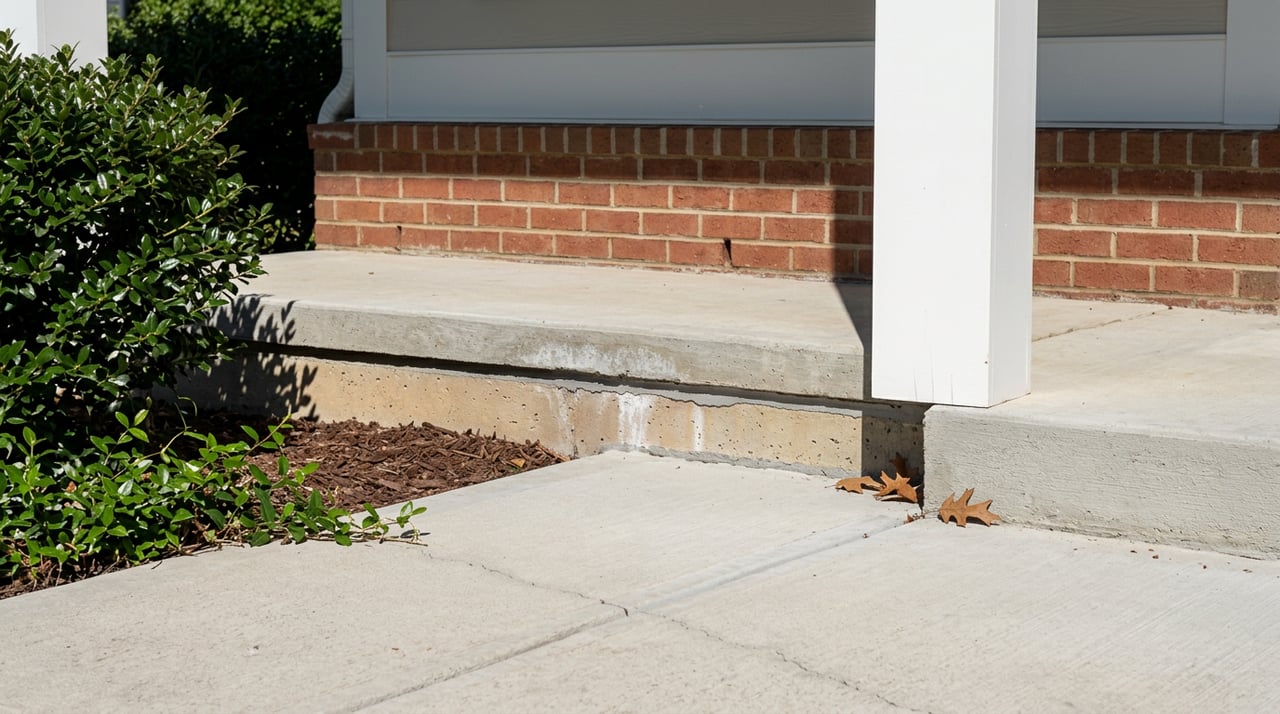
Fort Bend County sits on some of the highest plasticity-index expansive clay soils in Texas. When the soil dries in July it contracts and pulls away from the slab. When rain saturates it in October it swells back. Repeated over years, that cycle produces the doors that stop closing, the hairline drywall cracks above door frames, and the elevation differences a licensed inspector will pick up in twenty minutes.
Local inspectors have been direct about this. Imperial Pro Inspection notes that in Richmond and Rosenberg, "movement is a matter of when, not if," and specifically calls out Harvest Green, Aliana, Long Meadow Farms, McCrary Meadows, Arabella, Sorrento, and older neighborhoods like Pecan Grove and Trillium where mature live oak roots have had decades to reach foundation zones. The active new-construction corridor, Austin Point, Evergrove, Ryehill, Brookewater, Indigo, Holly Ridge, and Hallimore Ranch, sits on the same reactive soil.
Two useful things follow from that.
First, movement is not automatically damage. According to Imperial Pro, many Fort Bend problems trace back to vegetation moisture demand or drainage, not structural failure, and a root barrier under $2,000 can address what a repair sales call would price at $20,000 in piers. Dawson Foundation Repair's Richmond page attributes most local slab issues to that seasonal shrink-swell cycle rather than construction defects.
Second, the number a buyer's inspector writes down is only useful if there is something to compare it to. Without a baseline, one afternoon of ZIPLEVEL readings becomes a bargaining chip.
Why a pre-listing baseline changes the conversation
A ZIPLEVEL elevation survey documents the actual height of the foundation at dozens of points across the slab. It converts "the floor feels off in the primary bedroom" into a measured record. Ordering one before you list gives you three things a buyer's inspector cannot take away.
A slab you can't measure is a slab you can't defend. A slab you have measured, dated, and put in writing before a buyer walks the property is a slab that stops being a negotiation.
You get a written performance opinion from a licensed inspector, not a repair company. You get photographs and a labeled measurement grid. And you get the ability to answer the buyer's inspection report with data, not defensiveness. That matters more when a repair proposal from a contractor might land between $7,000 and $50,000, and undetected movement in the county averages $15,000 to $60,000 in eventual repairs, per figures published by Imperial Pro.
What today's Richmond market does to that leverage
Here is where the paperwork meets the price.
| Metric | Recent Richmond reading | A year earlier |
|---|---|---|
| Median sale price, 77406 (Feb 2026) | about $430,000 | up 2.4% |
| Median days on market, 77406 (Feb 2026) | 91 days | 55 days |
| Median list price, Richmond (June 2026) | about $468,000 | flat |
| Share of listings with a price drop (last 30 days) | roughly 50% | up about 3.5 points |
| Sale-to-list ratio | around 96% | down slightly |
The pattern is consistent across sources. Homes are moving, but slower, and roughly half of active listings have cut price at least once in the past month. In that environment, a buyer under contract who finds a missing MUD notice or an unexplained elevation variance is not going to shrug and close. They are going to ask for a credit. The sellers who prepare both documents in advance keep that credit in their pocket.
A pre-listing sequence that removes both re-trade points
If you list a Richmond home in the second half of 2026, the sequence below covers the two frictions above without inventing new work.
- Pull the FBCAD tax record. Confirm the MUD and any PID.
- Download the current Notice to Purchaser from the district's site. If it is not posted, email or call the district and ask for it in writing.
- Read the Texas seller's disclosure form under Property Code § 5.008 and answer honestly, including any prior foundation repair, plumbing leaks under slab, or drainage grading work.
- Book an independent pre-listing inspection with a licensed inspector, not a foundation repair company. Ask specifically for a ZIPLEVEL survey to establish a dated baseline.
- If the survey shows meaningful differential, get a second opinion before signing any repair contract. Root cause matters more than pier count.
- Put the MUD notice, the disclosure, the inspection report, and the elevation survey in the listing packet so buyers see them before they write.
That last step is the one most sellers skip. Sharing the packet up front changes who is on defense during option period.
FAQ
Do I have to hire an engineer to comment on the foundation before listing? No. Texas law permits both licensed professional engineers and licensed professional home inspectors to evaluate foundation performance. For pre-listing purposes, an independent inspector with elevation-survey capability is usually enough.
What if my Richmond home is not in a MUD? Not every property is. Some Richmond homes are on City of Richmond water, and some sit inside a Levee Improvement District or a Public Improvement District instead. The FBCAD record will show the taxing units. If a PID is involved, § 5.014 of the Property Code requires its own assessment notice.
Should I do repairs the buyer's inspector might ask for, or wait? It depends on cause. If the survey points to a drainage or vegetation problem, correcting that root cause protects the slab and is often inexpensive. Committing to piers before the underlying moisture problem is fixed can create new stress patterns without solving anything.
Will disclosing more scare buyers off? The Houston-area buyer pool is already familiar with MUD taxes and clay-soil movement. Their lender is underwriting for the MUD line item. What tends to scare them is the surprise, not the fact.
Ready to list with the paperwork already handled?
At Denise Moore Homes, pre-listing prep starts with the two questions above, not with a lockbox. If you are thinking about selling in Richmond, Rosenberg, Sugar Land, or the surrounding Fort Bend suburbs this year, let's sit down with your tax record, your subdivision, and the current market data and build a plan that keeps the leverage on your side. Let's Connect.