Ask a Richmond resident where they're headed on a warm Thursday evening this time last year, and the honest answer was probably somewhere else. Sugar Land for dinner. Katy for a concert. Maybe just home, because there wasn't much reason to go anywhere in Richmond itself after the shops on Morton Street rolled up for the night.
Ask that same question in September 2026 and you get two competing answers, both inside city limits, both brand new this year. One points toward Wessendorff Park downtown, where lawn chairs and blankets have been staking out shade trees for a free concert series that didn't exist twelve months ago. The other points west to Harvest Green, off the Grand Parkway, where a citrus-themed pool complex just opened its gates and Messina Hof's wood-fired pizza oven is running most nights of the week. Richmond didn't have one new thing to do this year. It built two, in opposite corners of town, without either one seeming to know or care about the other. That's the part worth sitting with, because it says something about where this city is actually headed that a single roundup of "things to do" would miss.
Two New Front Porches, Same Summer
The City of Richmond and the developer behind Harvest Green are not the same entity, don't share a marketing budget, and had no reason to coordinate a launch calendar. Yet both chose 2026 to open a permanent, recurring gathering space, in neighborhoods that couldn't be more different in age or architecture.
Downtown, the city launched Live on the Brazos, its first-ever free summer concert series, with an inaugural show at the Wessendorff Park pavilion on June 25. The city's own recap of that night, headlined "Richmond's got Rhythm," described a strong turnout of residents and families who filled the park with blankets and lawn chairs for a set from The Grooves, a Texas party band working through Motown, funk, and Top 40. A second show, pushed from a July 16 rainout to July 23, brought out The Emotions. The series closed its debut run on August 20 with Southern County Line, a Gulf Coast country act, before what the city has signaled will be a shift into fall programming.
Out at Harvest Green, the community's second on-site amenity complex, a citrus-themed build called The Slice, opened this summer as a follow-up to the original Farmhouse amenity center. It's built around pools shaped like grapefruit slices, plus a splash pad, two waterslides, a playground, a pickleball court, and an open event lawn for community gatherings. It's the kind of detail that tells you a developer is still investing years after the first homes sold, not just handing over the keys and moving on.
Neither of these had to happen this particular year. That they did, independently, in a town of Richmond's size, is the real story.
What's New Down on Morton Street
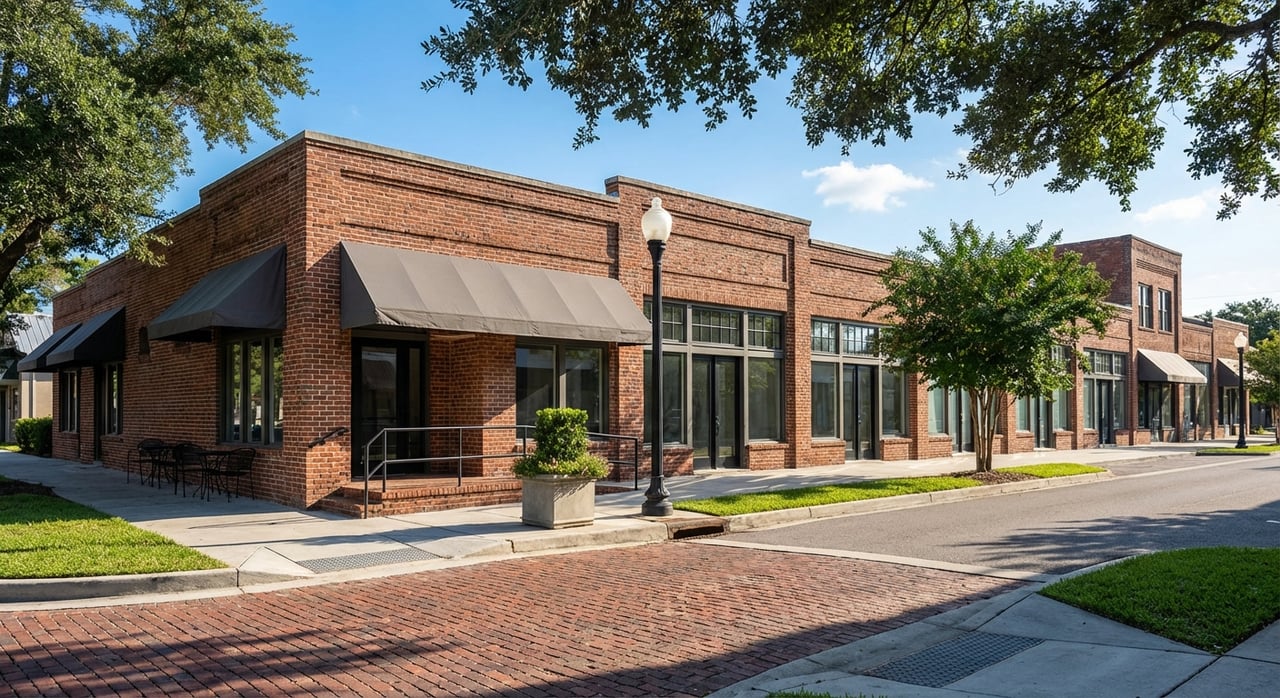
The historic core of Richmond hasn't needed reinventing. The 200 to 600 blocks of Morton Street have carried the city's retail and dining identity for decades, and that stretch of independent restaurants and shops was never the problem. What changed in 2026 is the calendar around them.
Live on the Brazos gave downtown its first organized reason to show up on a weeknight rather than just a weekend. The city paired each concert with food trucks and offerings from local restaurants, turning the park into something closer to a rotating block party than a standard band-in-a-gazebo evening. For a downtown that has always had good bones but a quiet after-hours pulse, three Thursday-night concerts pulling a crowd onto the lawn between late June and late August is a genuinely new data point.
The Farmers & Artisan Market at City Hall Park has been building its own following on a First Friday rhythm, and it leaned into that momentum with a Summerfest Throwback edition on August 7, pulling in more than fifty vendors alongside live music and food trucks for a 1970s-themed evening. Alongside the concert series, the market gave Morton Street another recurring event draw in a single summer.
If you already live within walking distance of downtown, this is the kind of thing that changes a weekly routine more than it changes a Zillow search. You don't need a reason to drive to Sugar Land on a Thursday anymore. The reason is now four blocks from the courthouse.
What's New at the Edge of Town
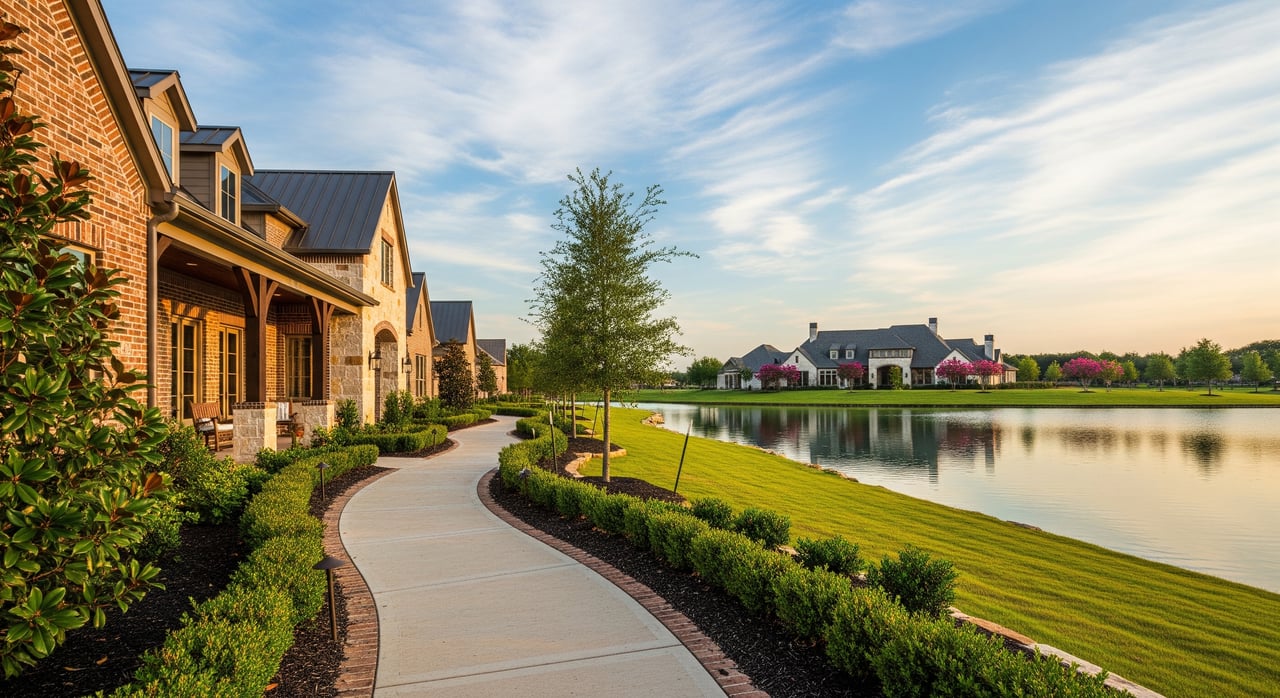
On the other side of town, Harvest Green has spent years building its identity as Houston's first agrihood, anchored by a working farm rather than a golf course. That identity got a lot more tangible in 2026.
Messina Hof, the Texas winery with roots dating back to a 1977 vineyard planting in Bryan, opened its Harvest Green Winery & Kitchen location at 8921 Harlem Road as a full-service restaurant paired with a tasting room. The kitchen runs Neapolitan-style pizzas out of a Mugnaini wood-fired oven and builds its Vineyard Cuisine menu, dishes like a pork chop with peach and cactus agrodolce, around pairings with the winery's own bottles. There's a wine-on-tap bar for anyone who wants a glass without committing to a bottle, and a pickup counter for pizza and wine growlers to go.
The farm itself keeps running its own programming. The community's 12-acre Village Farm, staffed by professional farm educators, supplies produce to residents through a Veggie Share program, and the neighborhood's recurring Street Eats Saturday food truck meetups draw crowds to the model home park on Vineyard Hollow Court. None of this required a new pool to matter, but The Slice gives Harvest Green residents a second reason to stay on their own side of the Grand Parkway on a Saturday rather than driving into Sugar Land.
Stack it up and here's what was happening at Harvest Green in the same stretch of 2026 that downtown got its concert series:
- A second amenity complex with resort-style pools, a splash pad, and two waterslides
- A full-service winery restaurant with a wood-fired pizza program
- A continuing calendar of food truck Saturdays and farm-based resident programming
That's not a marketing brochure list. It's an independent Texas winery and a master-planned community's own programming team, working on separate tracks, with the winery opening and the community's programming continuing in the same twelve months.
Why the Two Don't Compete
Here's the thing a generic "what to do in Richmond" post won't tell you: these two new centers of gravity aren't rivals, and they're not trying to be. Downtown Richmond is doing what old town centers do well, using free public space and civic programming to pull people toward a historic core that already has good restaurants and good bones. Harvest Green is doing what new master-planned communities do well, using private amenity investment to keep residents from ever needing to leave the neighborhood.
A resident living near Morton Street and a resident living inside Harvest Green are having genuinely different Thursday nights this fall, and both of those nights are new compared to a year ago. That's the actual shift. Richmond isn't becoming one thing. It's becoming two increasingly solid things at once, and residents on either end are noticing they have more reason to stay put than they used to.
If you're already here, that's worth knowing next time someone asks why you like it. If you're weighing what a specific part of Richmond actually feels like day to day, from a historic downtown block to a spot inside Harvest Green, that's the kind of on-the-ground read that doesn't show up on a listing sheet. Denise Moore Homes has spent years learning these blocks one street at a time, and that's the conversation worth having before you decide which version of Richmond fits your life. Let's Connect.